Olivia Long · 11 November 2026
How Digital Note Ecosystems Leverage Adaptive Tagging Systems to Enhance Cross-Referencing in Distributed Research Teams
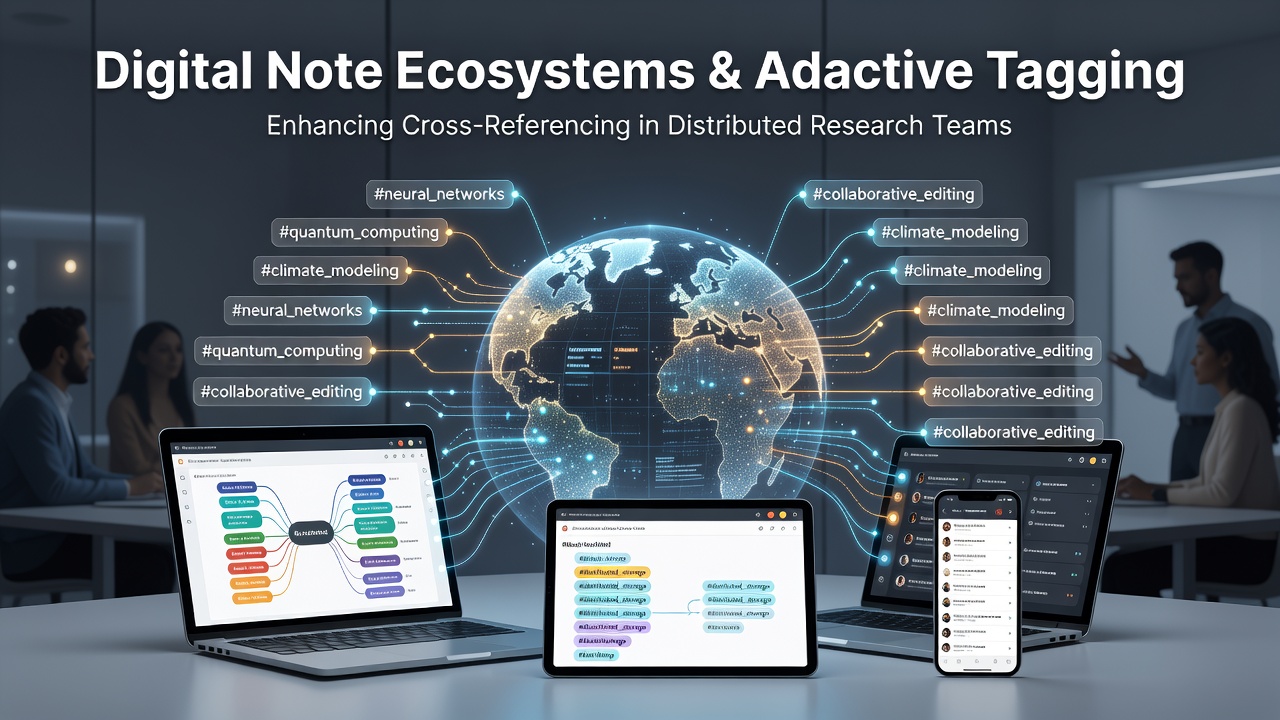
Digital note ecosystems have evolved into interconnected platforms that support collaborative knowledge management across geographically dispersed groups, and adaptive tagging systems sit at the core of these setups by automatically adjusting labels based on content patterns and user interactions. Researchers at institutions such as the University of Melbourne have documented how these systems analyze note structures in real time, then refine tags to link related entries without manual intervention from team members. This process allows distributed research teams to maintain coherence even when contributors add material from different time zones and contexts.
Core Mechanisms Behind Adaptive Tagging
Adaptive tagging begins wth algorithms that scan incoming notes for semantic similarities, keyword clusters, and contextual metadata, then assigns or updates tags dynamically as new information arrives. Studies from the Canadian Institute for Advanced Research show that these systems often incorporate machine learning models trained on historical team data, which helps predict connections between seemingly unrelated entries. Team members benefit because cross-references appear automatically in side panels or linked lists, reducing the time spent searching through thousands of individual notes.
Platforms integrate these tags with version histories so that earlier iterations of a note retain their original labels while newer versions receive updated ones, and this layered approach preserves traceability. Observers note that in practice the tags evolve alongside project milestones, such as when a biology team shifts focus from field observations to laboratory analysis in late 2025, prompting the system to strengthen links between environmental data sets and experimental results.
Cross-Referencing Across Distributed Teams
Distributed research teams rely on cross-referencing to align contributions from specialists who rarely meet in person, and adaptive tagging facilitates this by surfacing relevant notes based on shared project identifiers rather than static folders. Data from the European Research Council indicates that teams using these systems report faster retrieval of supporting evidence during joint reviews, because the tags create dynamic pathways between documents authored in separate locations. The system also accounts for differing terminologies across disciplines, automatically mapping synonyms so that a note tagged under one label surfaces in searches using another.
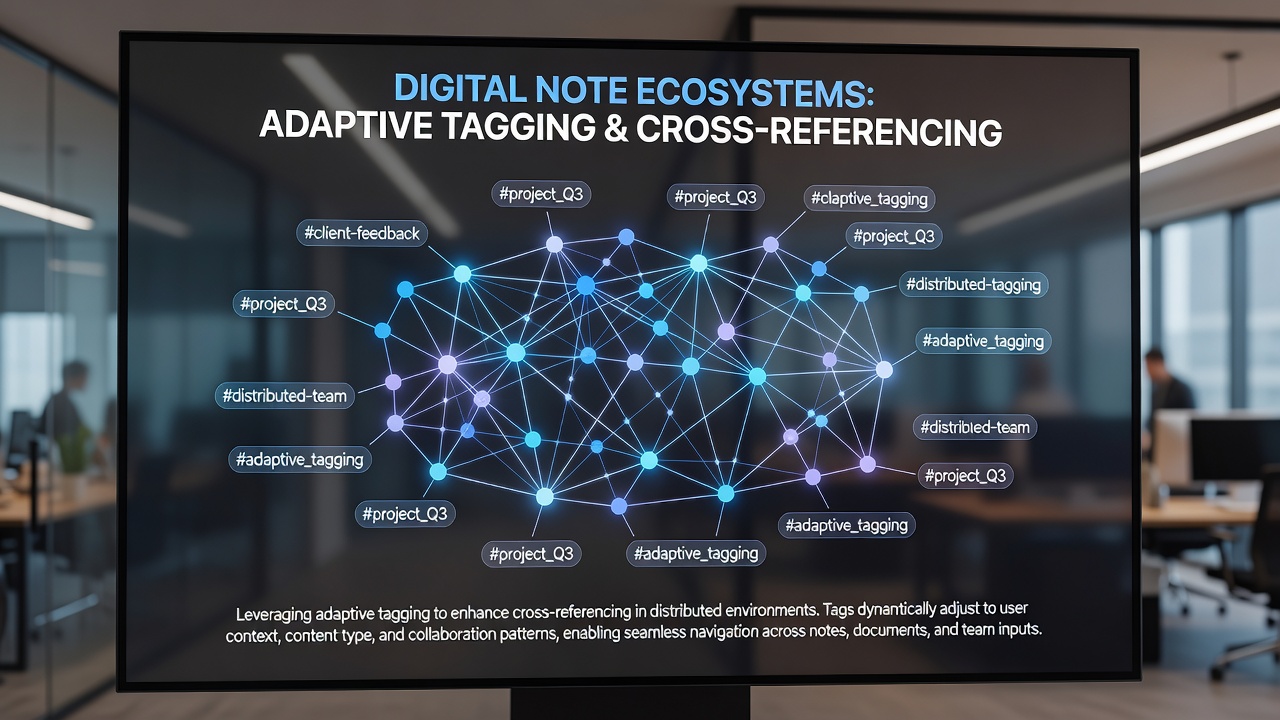
November 2026 brought platform updates that expanded tag synchronization across more cloud regions, which helped teams handling sensitive datasets maintain consistent references without delays caused by regional server differences. These enhancements built on earlier synchronization protocols and allowed tags to propagate changes within seconds rather than minutes, supporting real-time collaboration during intensive writing phases.
Implementation Patterns Observed in Practice
Teams often start by establishing baseline tag vocabularies tied to core research themes, after which the adaptive layer takes over by suggesting refinements as notes accumulate. One research group studying climate modeling found that their tagging system began grouping simulation outputs with policy briefs once the algorithm recognized recurring geographic terms, and this connection proved useful during cross-regional analysis sessions. The process relies on continuous feedback loops where user clicks on suggested links strengthen or weaken tag associations over time.
Security considerations enter the picture when tags link notes across permission levels, yet many ecosystems enforce granular controls that hide sensitive references from unauthorized viewers while still allowing the underlying connections to support internal team queries. Reports from the Australian Research Council highlight how these controls scale with team size, enabling larger groups to share reference networks without compromising individual data boundaries.
Future Directions and Platform Developments
Developers continue to refine adaptive tagging by incorporating contextual signals from external calendars and meeting transcripts, which adds another dimension to cross-referencing accuracy. As more research organizations adopt these tools, the volume of tagged content grows exponentially, and systems must handle increased query loads without degrading response times. Integration with citation management software further extends the reach of these tags, allowing references to flow directly into published papers while preserving the original note ecosystem structure.
Conclusion
Adaptive tagging systems within digital note ecosystems provide structured yet flexible mechanisms that support cross-referencing needs in distributed research environments, and ongoing refinements ensure these capabilities keep pace with expanding team sizes and data complexity. The combination of automated tag evolution and permission-aware linking creates reliable pathways for knowledge sharing that operate consistently across time zones and institutional boundaries.