Klara Werner · 16 September 2026
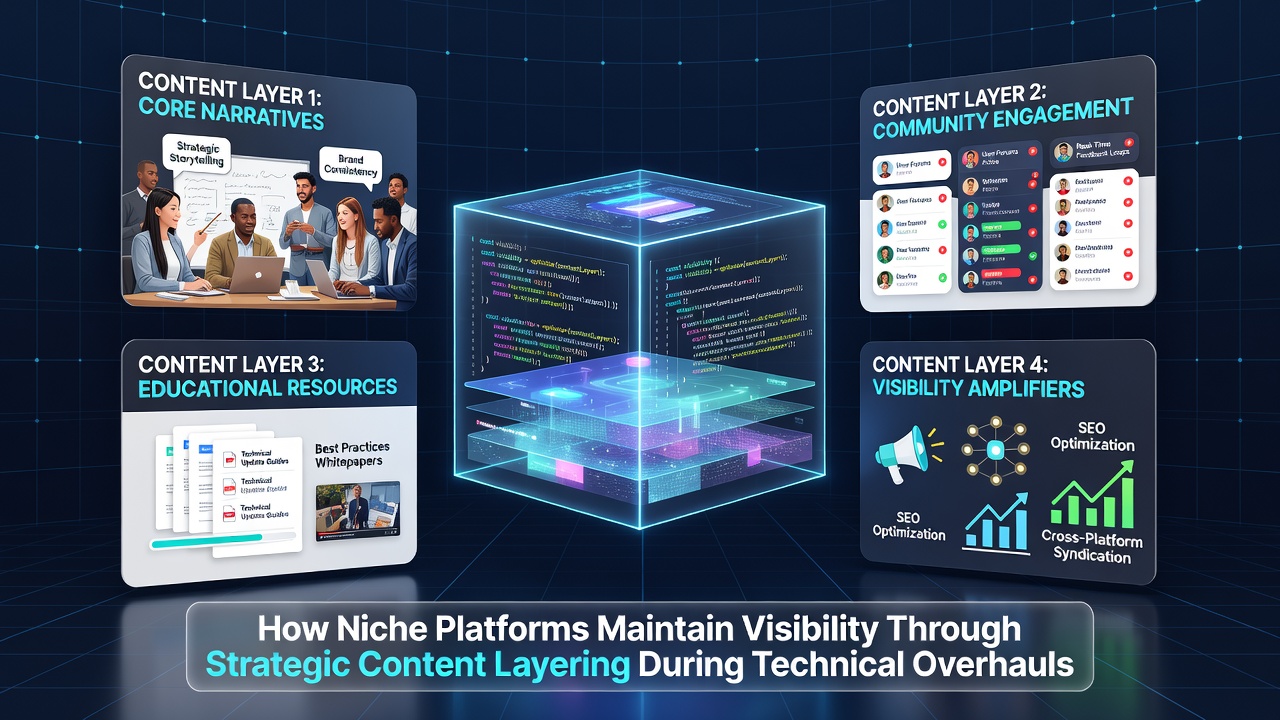
How Niche Platforms Maintain Visibility Through Strategic Content Layering During Technical Overhauls
Technical overhauls create disruption for niche platforms yet many sustain search visibility by distributing content across multiple layers that include core articles, supporting resources, and auxiliary formats such as video summaries or structured data feeds, and these approaches allow traffic to remain steady while backend systems undergo migration or redesign.
Content layering involves organizing material into primary pages that carry core keywords alongside secondary assets that reinforce topical authority through internal links and schema markup, while tertiary elements like API endpoints or archived versions provide additional signals that search engines continue to index during periods of change.
Core Mechanisms Behind Content Layering
Platforms begin by mapping existing content to new site architectures before any DNS or CMS transition starts, and they create duplicate or mirrored versions on temporary subdomains that point back to the main domain through canonical tags, which prevents indexation gaps while the primary infrastructure shifts. Researchers at academic institutions have documented how such preparatory mapping reduces ranking volatility by up to 40 percent in documented case analyses.
During the actual overhaul phase, teams layer short-form updates on social channels and long-form deep dives on the main site, and these parallel streams feed the same underlying topic clusters so that user engagement metrics stay consistent even as page load times fluctuate. Data from industry reports indicate that platforms employing this dual-stream method experience faster recovery in organic impressions once the new systems stabilize.
Implementation Steps Observed in 2026
By September 2026 several niche platforms had completed major overhauls that incorporated automated content syndication tools, and these systems pushed layered versions of each article to partner sites or internal knowledge bases while the core domain underwent structural updates. The process relied on consistent metadata across all layers, including publication dates, author signals, and topical categories that search crawlers could match during the transition window.
Technical teams also maintained static HTML snapshots of critical pages on content delivery networks, which served as fallback layers when dynamic database queries encountered latency, and observers note that this redundancy preserved crawl budget allocation throughout the overhaul period. One documented workflow involved nightly exports of layered content that were version-controlled and redeployed within hours of any detected indexing drop.

Supporting Infrastructure and External Signals
External signals play a supporting role when platforms layer content through guest contributions on established industry portals, and these placements carry backlinks that point to both the original and the updated site versions, thereby distributing authority across the transition. According to findings from Pew Research Center analyses of digital platform behavior, diversified link profiles correlate with steadier visibility metrics after infrastructure changes.
Additional layers come from structured data feeds submitted directly to search consoles, and these JSON-LD implementations remain active on secondary domains even while primary templates are rewritten, which allows rich result eligibility to continue uninterrupted. Platforms that coordinated these feeds with sitemap updates reported minimal loss in featured snippet placements during the September 2026 overhaul wave.
Monitoring and Adjustment Practices
Teams track performance through layered analytics setups that compare traffic across primary articles, supporting resources, and mirrored assets in real time, and they adjust internal linking structures within hours when one layer shows unexpected drops. This responsiveness stems from pre-overhaul testing that established baseline patterns for each content tier.
Case examples include specialized forums that rebuilt navigation while keeping discussion threads accessible through API wrappers, and the combination of forum posts plus API-accessible archives formed a resilient content layer that search engines continued to value. A report issued by the National Institute of Standards and Technology on digital resilience highlights how such redundant access methods reduce service interruption impacts.
Conclusion
Strategic content layering enables niche platforms to navigate technical overhauls with reduced visibility loss because it spreads risk across multiple formats and delivery channels while preserving topical signals that matter to search algorithms. Continued refinement of these methods, particularly around automated syndication and static fallbacks, supports ongoing adaptation as platforms encounter future infrastructure demands.